

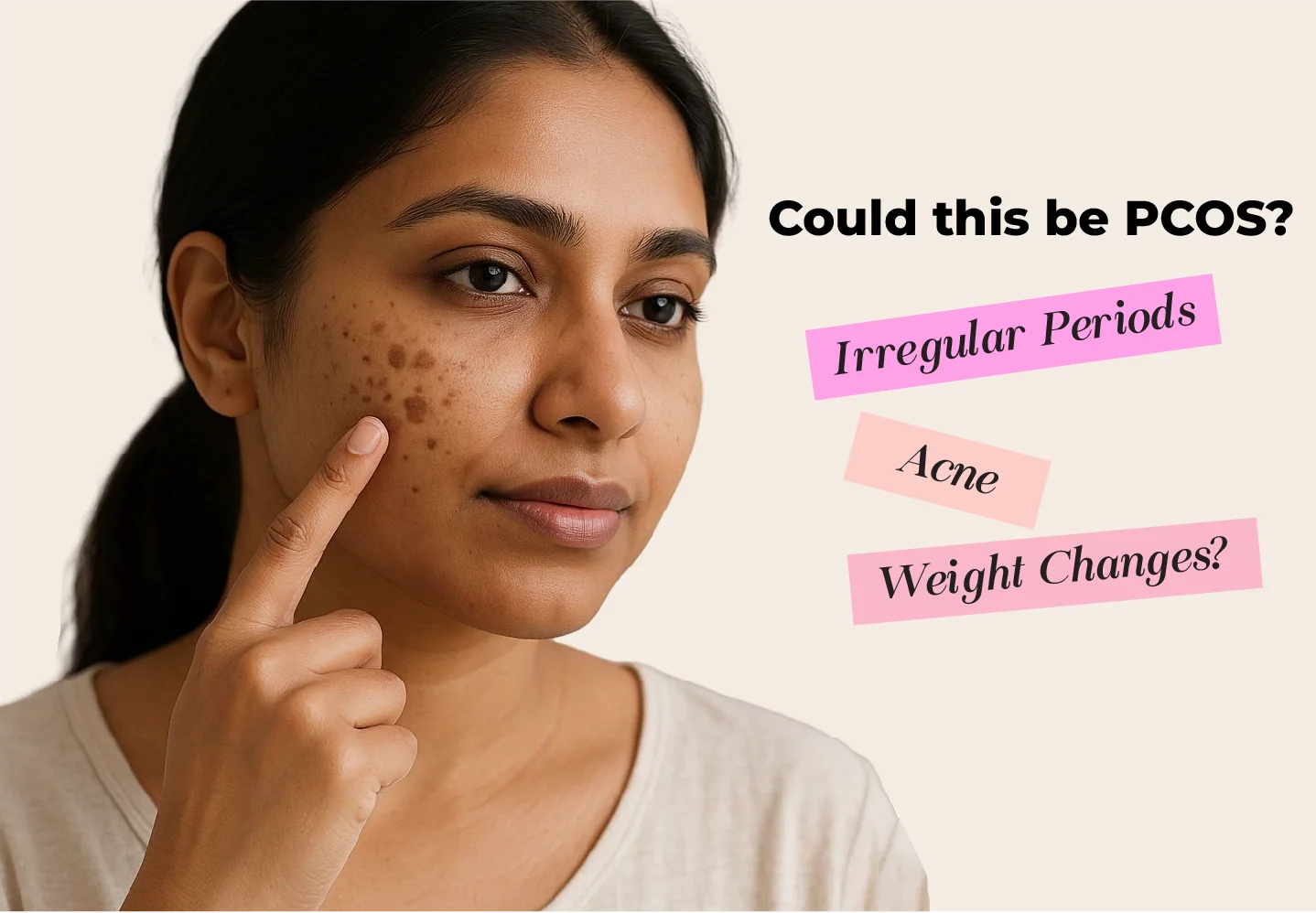
If you've been dealing with irregular periods, unexplained weight gain, or stubborn acne, you may have come across the term PCOS - Polycystic Ovary Syndrome.
You are not alone. PCOS is one of the most common hormonal disorders affecting women today, yet most women don't fully understand what it is or what it's doing to their body.
This blog explains it clearly - what PCOS is, what signs to look for, how it affects your period, and what you can do about it.
What Is PCOS?
PCOS is a hormonal disorder that affects women of reproductive age. It happens when the ovaries produce too much of a male hormone called androgen. This throws the normal hormonal balance off, which then disrupts ovulation - the process where your ovaries release an egg each month.
In a normal cycle, one egg is released every month. With PCOS, that doesn't happen regularly. Instead, the ovaries may develop small fluid-filled sacs called follicles that never fully release an egg. Over time, this leads to a range of physical and emotional symptoms that affect daily life.
PCOS Symptoms You Shouldn't Ignore
The tricky thing about PCOS is that symptoms vary from woman to woman. Some women have all of them. Others have just one or two. Here are the most common signs to watch for:
Irregular periods - This is the most common sign. You might have fewer than eight periods a year, very long cycles, or periods that come and go unpredictably.
Excess androgen - Too much male hormone can show up as unwanted facial or body hair, severe acne, or hair thinning on the scalp.
Polycystic ovaries - The ovaries may become enlarged and contain multiple small follicles surrounding the eggs.
Weight struggles - Many women with PCOS find it hard to manage their weight because of insulin resistance, which affects how the body processes food.
If you recognise two or more of these signs, it's worth consulting a doctor.
How PCOS Makes Period Pain Worse
For women with PCOS, periods are often unpredictable, heavier than normal, and more painful.
Here's why. Because ovulation is irregular, the uterine lining builds up thicker than it normally would. When your period finally comes, that thicker lining sheds all at once - leading to heavier bleeding and more intense cramps.
Managing PCOS isn't just about dealing with your period when it arrives. It's about supporting your cycle all month long.
Does Your Period Product Make a Difference with PCOS?
Most women don't think about this - but yes, it can.
Conventional pads made with synthetic materials and chemicals can add to inflammation and discomfort, especially during an already painful cycle. Switching to a toxin-free, chemical-free option removes one source of irritation that your body doesn't need.
Beyond basic period care, there are wellness liners designed specifically to support hormonal balance and uterine health between cycles. The wellness liner from ZOY is one example. It works beyond absorption; it works through transdermal body heat, activating a blend of herbs that support the body from the outside in.
Here's what makes it different:
Feature & Benefit for PCOS
- Snow Lotus, Angelica, Motherwort - Supports hormonal balance naturally
- Astragalus, Mugwort, Safflower, Mint - Improves pelvic blood circulation
- Chemical-free and toxin-free - Gentler alternative to plastic-based pads
-
Daily use design - Works between cycles, not just during
Important note: These wellness liners are designed for daily use between cycles. Pregnant women & diabetic should not use them, and use should be stopped during your active period as per product guidelines.
Lifestyle Tips That Help with PCOS
Medical guidance is important for managing PCOS, but small daily habits make a real difference too.
Eat for hormone balance - Focus on high-fibre vegetables, lean proteins, and whole grains. These help manage insulin resistance, which is a key driver of PCOS symptoms.
Manage stress - High stress raises cortisol, which makes the hormonal imbalance worse. Even 10 minutes of gentle yoga or meditation daily can help over time.
Prioritise sleep - Poor sleep worsens the metabolic issues linked to PCOS. Aim for seven to eight hours consistently.
Track your cycle - Even irregular cycles have patterns. Tracking helps you spot changes, communicate better with your doctor, and understand your body more clearly.


