

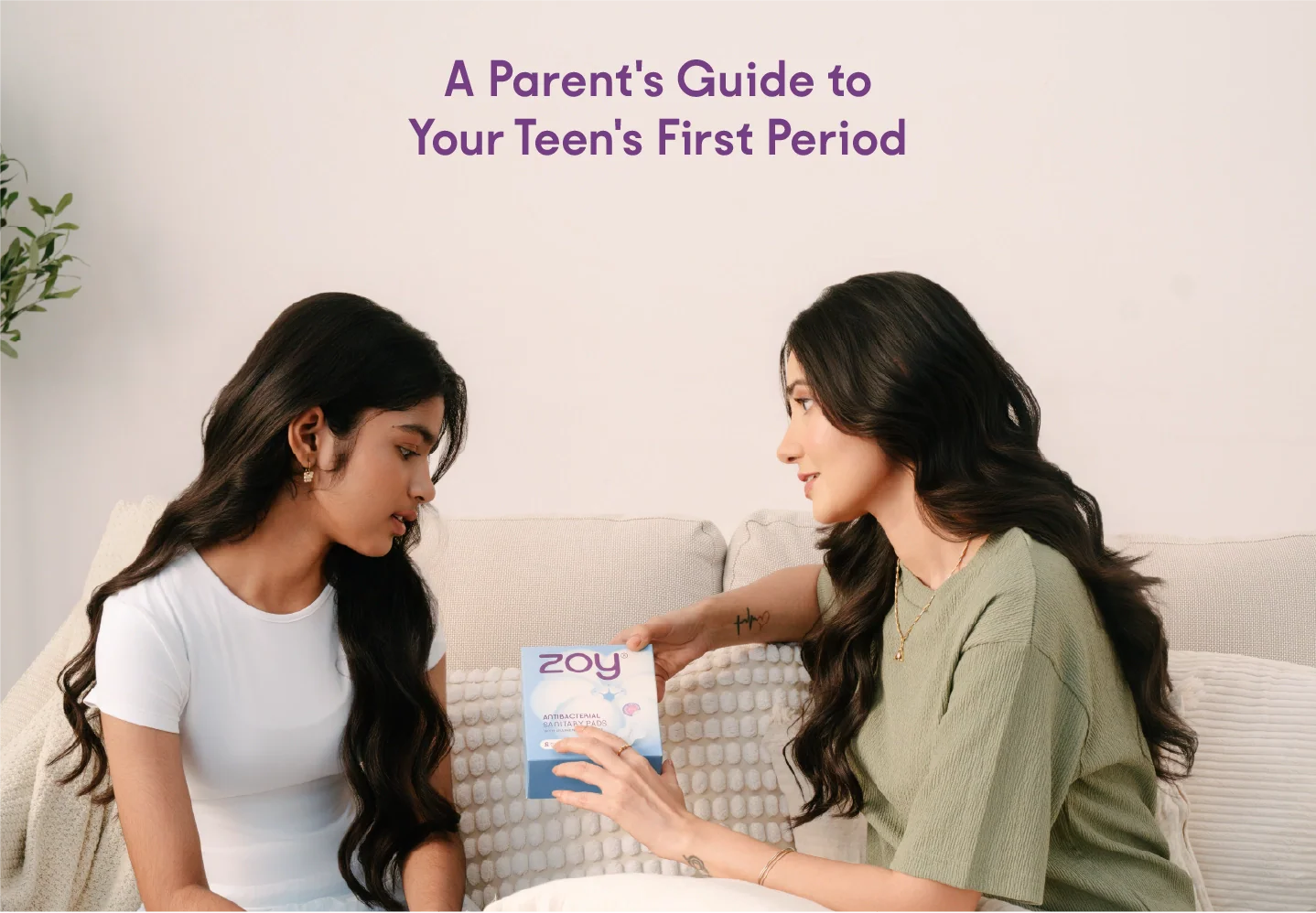
A first period can feel like a big emotional milestone. For some teens, it feels exciting. For others, it feels confusing, scary, embarrassing, or simply unexpected. The difference often comes down to preparation: when a trusted adult talks about periods calmly, the teen learns that menstruation is normal - not shameful, dirty, or something to hide.
This guide is written for parents, caregivers, elder sisters, teachers, and anyone supporting a teen through menarche, the medical word for the first period. You do not need a perfect speech. You need clear information, a kind tone, and a few practical supplies ready before the first bleed arrives.
When does the first period usually start?
Most girls get their first period around 12 to 13 years of age, although starting earlier or later can still be normal. Puberty does not follow one fixed calendar. Family history, nutrition, body composition, health, stress, and genetics can all influence timing.
A helpful clue is breast development. A first period often begins around 2 to 3 years after breast buds start. Many teens also notice a white or clear vaginal discharge before their first period. This discharge is usually normal and can appear several months before the first bleed.
Signs a first period may be coming
Teens feel safer when they know what to expect. Watch for these signs:
- Breast development and a recent growth spurt
- Pubic or underarm hair growth
- White or clear vaginal discharge in underwear
- Mild cramps, bloating, or lower-belly heaviness
- Mood changes, tiredness, or increased sensitivity
- Occasional brown spotting, which may be the first period starting slowly
Do not wait for the first stain to begin the conversation. Once puberty signs appear, begin small, normal conversations.
How to talk to your daughter about periods without making it awkward
The best period education is not one serious lecture. It is many small conversations over time. Start with simple language and keep your tone relaxed.
Try saying:
- "Periods are a normal sign that the body is growing up."
- "Your first period may look like red blood, brown spots, or a small stain."
- "You can always tell me. You will not be in trouble."
- "We will keep a small period kit in your school bag so you are prepared."
Use correct body words such as period, vagina, uterus, and vulva. Clear words reduce fear and misinformation. If your teen asks a question and you do not know the answer, say, "Let us find out together." That answer builds trust.
A note for fathers and male caregivers
Period support is not only a mother's responsibility. A father who can calmly buy pads, answer basic questions, and say "this is normal" helps remove stigma. The teen learns that periods are a family health topic, not a secret.
First period: what to expect
The first period may not look like a full flow. It can be:
- A few red spots
- Brown or rust-coloured discharge
- A light flow that lasts 2 to 7 days
- Irregular for the first one to two years
The first few cycles can arrive early, late, skip a month, or vary in flow. Mild cramps, backache, tiredness, mood changes, and bloating are also common. Reassure your teen that the body is learning its rhythm.
Menstrual hygiene habits to teach early
Good habits from the first cycle protect comfort and confidence.
- Change pads every 4 to 8 hours, or earlier if the pad feels full, damp, or uncomfortable.
- Wash hands before and after changing any period product.
- Wrap used pads in paper or the pad wrapper and place them in a bin. Never flush pads.
- Wash the external intimate area gently with plain water. Do not put soap or scented products inside the vagina.
- Wear breathable underwear and change it if it becomes damp.
Track the period date in a calendar or app to understand patterns.
Choosing beginner-friendly period products
For most teens, pads are the easiest first product because they do not require insertion and are simple to change at school. Choose pads that feel soft, breathable, and comfortable against sensitive skin.
ZOY's organic cotton period care range is a strong first-period option because it is designed for comfort, heavy-flow support, odour control, and rash-prone sensitive skin. For overnight or school anxiety, full-coverage disposable period panties can add extra confidence because they reduce shifting, side leakage, and stain fear.
As your teen becomes more comfortable, you can introduce panty liners for light discharge days, period panties for backup, and menstrual cups later if she wants to explore reusable options.
Period kit for school: what to pack
A first-period school kit should be discreet, practical, and easy to use. Pack everything in a small opaque pouch.
- 2 to 3 pads in different sizes
- 1 disposable period panty or spare underwear
- Unscented wet wipes
- Hand sanitiser
- A small disposable bag for used products
- A pain reliever only if already approved by a doctor or parent
- A small note that says: "You are okay. Tell a trusted adult if you need help."
That last item may feel small, but it matters. A frightened teen often needs reassurance as much as supplies.
What not to say
Avoid language that creates shame. Do not say
- "Do not tell anyone."
- "This is dirty."
- "Now you must behave like a woman."
- "You are too young for this."
Instead, say:
-
"This is normal."
- "Your body is growing."
- "We will handle it together."
- "You can ask me anything."
When should you speak to a doctor?
Most first periods are normal, but medical advice is sensible if your teen has very heavy bleeding, severe pain that stops daily activities, fainting, bleeding that lasts longer than 7 days, or no period by around 15 years of age. Also speak to a doctor if periods start very early, if there is unusual discharge with itching or burning, or if your teen seems extremely distressed.
Confidence starts before the first stain
The goal is not only to teach a teen how to use a pad. The goal is to teach her that her body is not something to be ashamed of. A calm home conversation, a prepared school kit, and gentle products can turn a scary surprise into a manageable milestone.
ZOY helps make that transition easier with organic cotton pads, period panties, and liners designed for real bodies, real school days, and real first-period nerves.


