

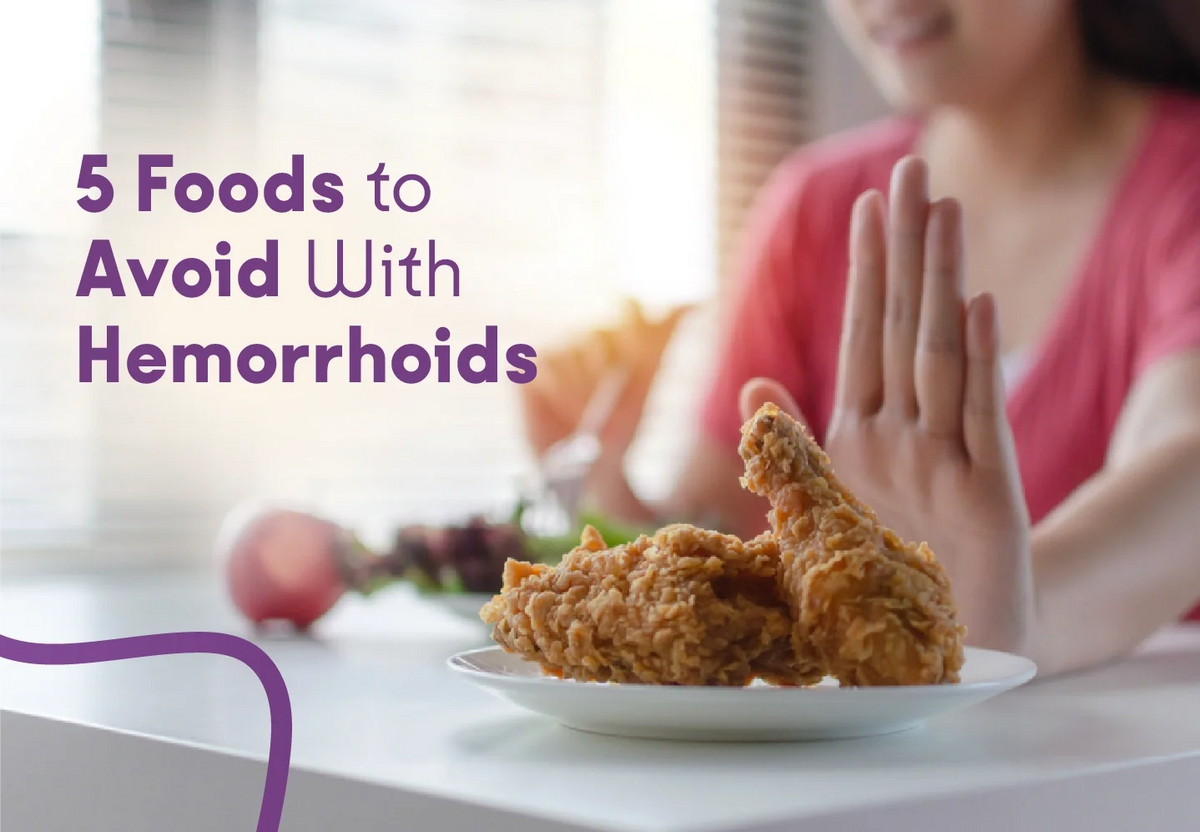
Hemorrhoids are swollen veins in the lower rectum or around the anus. When they flare up, what you eat will not cure them on its own - but your diet can make bowel movements easier or harder, which can directly affect discomfort.
If constipation and straining are part of the problem, a few practical food changes can make a real difference. Here are five foods or food groups worth limiting during a flare-up, plus what to choose instead.
Foods to Avoid With Hemorrhoids
The most useful hemorrhoid diet is less about banning one specific food and more about preventing constipation and straining. Limit foods that are low in fibre or that personally worsen your digestion, and build your meals around fibre-rich foods and enough fluids.
Spicy foods may worsen burning or irritation for some people. Refined low-fibre foods and heavily processed foods can make it harder to get enough fibre. Alcohol may contribute to dehydration, while dairy is worth limiting only if you notice that it contributes to constipation for you.
1. Spicy Foods
Chilli peppers, hot sauces and heavily spiced dishes do not cause hemorrhoids. But if you already have a flare-up, spicy food can make burning or irritation around the anus feel worse for some people.
If you notice a clear pattern between spicy meals and discomfort, reduce them temporarily and see whether your symptoms improve.
2. Refined, Low-Fibre Foods
White bread, pastries, biscuits and other refined-flour foods generally provide less fibre than whole-grain alternatives. A low-fibre diet can contribute to harder stools and constipation, which can mean more straining during bowel movements.
Try swapping refined options for oats, brown rice, whole grains, fruits, vegetables and legumes.
3. Fried and Heavily Processed Foods
Fried snacks and highly processed foods are often low in fibre. If they replace fibre-rich foods in your diet, they can make constipation more likely in some people.
You do not need a completely fat-free diet. The practical goal is to make high-fibre whole foods the foundation of your meals rather than relying heavily on fried or ultra-processed choices.
4. Dairy - If It Constipates You
Dairy does not worsen hemorrhoids for everyone. But if milk, cheese or other dairy products tend to make you constipated or bloated, reducing them during a flare-up may make bowel movements more comfortable.
Pay attention to your own pattern rather than eliminating dairy automatically.
5. Alcohol - and Watch Excess Caffeine if It Affects Your Hydration
Alcohol can contribute to dehydration, and dehydration can make stools harder. If you are dealing with constipation or a hemorrhoid flare-up, keeping alcohol low and prioritising water is sensible.
Caffeine does not need to be avoided by everyone. If large amounts of coffee or other caffeinated drinks upset your digestion or reduce your overall fluid intake, cut back and see how you feel.
What to Eat Instead
The general direction is simple: more fibre, enough fluids, and foods that help keep stools soft and easier to pass.
• Whole grains such as oats, brown rice and whole-wheat foods
• Fruits and vegetables, with edible skins where appropriate
• Legumes such as lentils, chickpeas and beans
• Plenty of water through the day
Increase fibre gradually rather than all at once. A sudden large increase can cause bloating or discomfort, and fibre works best when you are also drinking enough fluid.
Beyond Diet: What Else Helps?
Diet is only one part of haemorrhoid care. Simple bowel and lifestyle habits can reduce unnecessary pressure on the area:
• Do not delay a bowel movement when you feel the urge
• Avoid excessive straining
• Avoid sitting on the toilet for long periods
• Move regularly rather than sitting for long stretches
• Use a warm sitz bath for temporary comfort during a flare-up
When It's More Than a Diet Issue
Rectal bleeding should not automatically be assumed to be hemorrhoids. Seek medical advice if you have:
• Heavy or ongoing rectal bleeding
• Bleeding with dizziness, weakness or unusual fatigue
• Severe or worsening pain
• A very painful or hard lump near the anus
• A prolapsed haemorrhoid that does not go back in
• A new change in bowel habits along with bleeding
• Symptoms that do not improve with appropriate home care
These symptoms can occur with conditions other than haemorrhoids, so persistent or unusual bleeding deserves proper evaluation.
Hemorrhoids During Pregnancy and Postpartum
Hemorrhoids are particularly common during pregnancy and after childbirth because of increased pelvic pressure, constipation and straining during labour.
During this stage, fibre, fluids, gentle bowel habits and appropriate medical guidance remain important. If you are pregnant or recently gave birth, check with your healthcare professional before using medicines or concentrated herbal remedies for hemorrhoids.
Herbal Wellness Support for Haemorrhoid Discomfort
Alongside diet, hydration, bowel habits and appropriate medical care, supportive intimate wellness can be useful when haemorrhoid discomfort overlaps with non-period intimate-care needs.
ZOY Herbal Wellness Liners are daily-use cotton liners infused with Snow Lotus, Cnidium, Sophora, Angelica and Motherwort - herbs traditionally used in women's wellness for comfort, freshness, odour control and menstrual wellbeing support.
Based on ZOY's product R&D, the herbal formulation is designed to provide supportive intimate-wellness benefits through transdermal activity. ZOY positions the Wellness Liner as supportive wellness care for women experiencing haemorrhoid-related discomfort, alongside appropriate diet, hydration and medical care.
The liner does not replace medical evaluation or treatment. Persistent bleeding, severe pain or recurring haemorrhoids should be assessed by a healthcare professional.
Conclusion
No single food causes haemorrhoids, and no single food can cure them. The biggest dietary priority is keeping stools soft and reducing constipation and straining.
Choose more fibre-rich whole foods, drink enough water, notice which foods personally worsen your symptoms, and avoid spending long periods straining on the toilet.
For women who also want supportive herbal intimate care, ZOY Herbal Wellness Liners can be incorporated into a broader wellness routine.


