

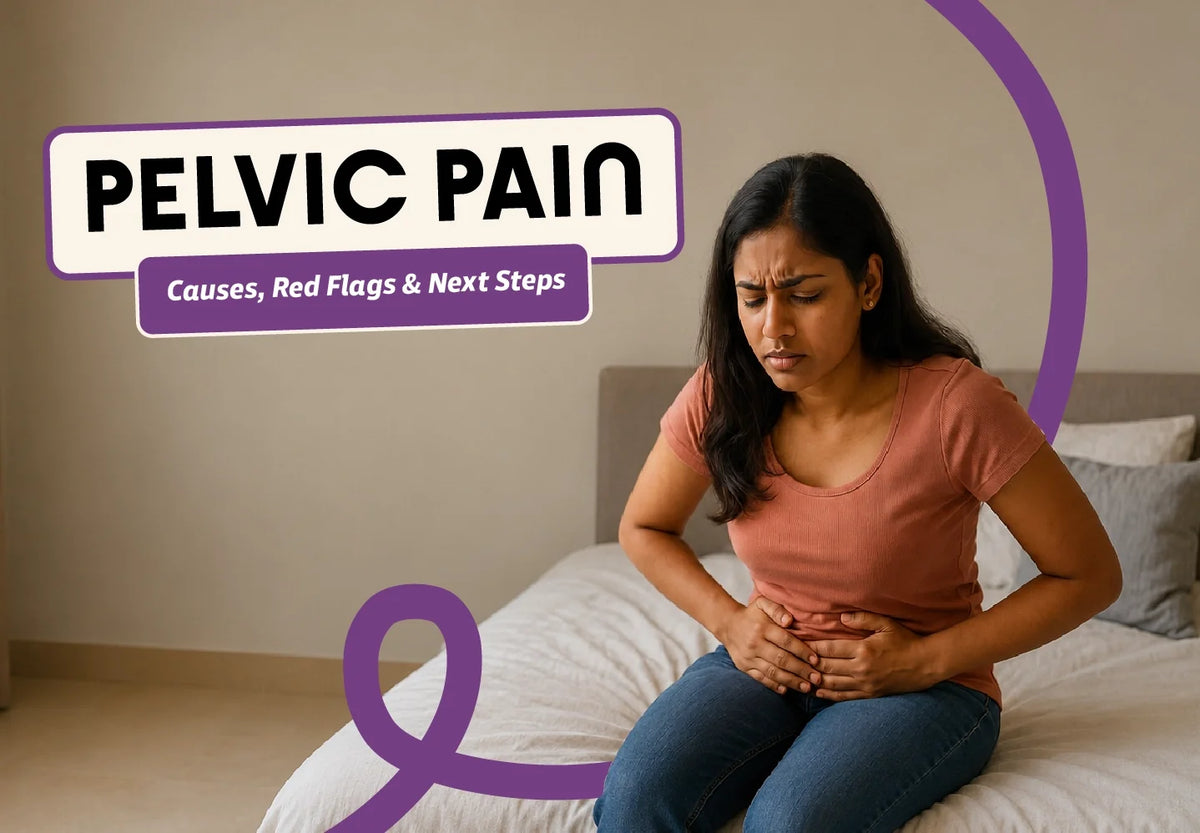
If you have had pelvic pain for months and you are tired of hearing “it's probably just cramps,” you are not imagining it, and you are not overreacting. Pain that keeps coming back can mess with your sleep, your workouts, your relationships, and your confidence in your own body. Here is what it might mean, and when it is time to get it checked.
The 30-second answer
Chronic pelvic pain means pain in your lower belly or pelvis that lasts six months or longer. It can come from your reproductive organs, bladder, bowel, pelvic floor muscles, or nerves, and sometimes more than one of these plays a part.
What does it actually feel like?
There is no single “correct” version of this pain. It might be a dull ache that never fully goes away, sharp pain that comes and goes, heaviness or pressure, a burning feeling, or pain during sex, peeing, or pooping. Some people feel it every single day. Others notice it mostly lines up with their period.
Here is the part worth remembering: the pain is real, even if a scan comes back normal. Chronic pain can involve how your muscles, nerves, and brain process pain signals over time, so it can take more than one doctor's visit to get answers.
What can cause it
Doctors usually look at a few different systems, not just the uterus.
- Period and reproductive causes: endometriosis, adenomyosis, fibroids, pelvic infection, ovarian cysts, and other gynaecological conditions.
- Bladder causes: painful bladder syndrome or recurring urinary issues that can feel like pelvic pain.
- Bowel causes: IBS, constipation, or other digestive issues that can overlap with period pain.
- Muscle and joint causes: tight or overworked pelvic floor muscles, hip issues, back issues, or scar tissue.
- Nerve causes: irritated nerves and pain sensitisation, which can keep pain going even after the original trigger has calmed down.
Sometimes doctors don't find one single cause. That does not mean the pain isn't real. Treatment can still focus on reducing pain and helping you get back to your normal routine.
Red flags: when to get help right away
Get urgent medical care for sudden or severe pelvic pain, especially alongside fainting, dizziness, fever, vomiting, very heavy bleeding, pain in your shoulder tip, or if there is any chance you could be pregnant. These combinations should never wait.
What happens at the doctor's appointment
It usually starts with a conversation: where it hurts, when it started, whether it follows your cycle, and whether it changes with sex, peeing, pooping, food, or movement. Depending on what you describe, your doctor may suggest a pelvic exam, a pregnancy test, blood or urine tests, an ultrasound, or other imaging. You probably won't need every single test.
Take this mini tracker with you
- Dates and times the pain appears
- Pain score from 0 to 10
- Bleeding, clots or spotting
- Bowel and bladder symptoms
- Pain during or after sex
- Medicines or home measures tried - and whether they helped
- What the pain stopped you from doing
What might help while you figure things out
A heating pad, gentle movement, regular sleep, and relaxation techniques can make some days easier. Pain medicine or pelvic floor physiotherapy help some people, but the right option depends on what is likely causing your pain, your health history, and your doctor's advice.
Period products can help with bleeding, leaks, dampness, and comfort on your skin. They cannot diagnose or treat endometriosis, adenomyosis, fibroids, infection, or whatever is actually causing your pelvic pain. Being upfront about that is how we earn your trust, and it helps you get the right kind of help.
The bottom line
Pelvic pain that has lasted six months or longer is worth bringing up with a gynaecologist or your regular doctor. Keep track of your symptoms, mention everything (period, bladder, bowel, muscles, sex), and get urgent care for sudden severe symptoms. The goal isn't just a diagnosis; it's helping you feel like yourself again.
Support for the days in between
When pelvic pain comes with heavy or unpredictable flow, reliable coverage can take one worry off your plate. ZOY period care is here for comfort and protection. It is not a substitute for medical care.
Explore Antibacterial Pads | Explore Disposable Period Panties


