

The biggest rename in women's hormonal health history just happened. Here's everything you need to know.
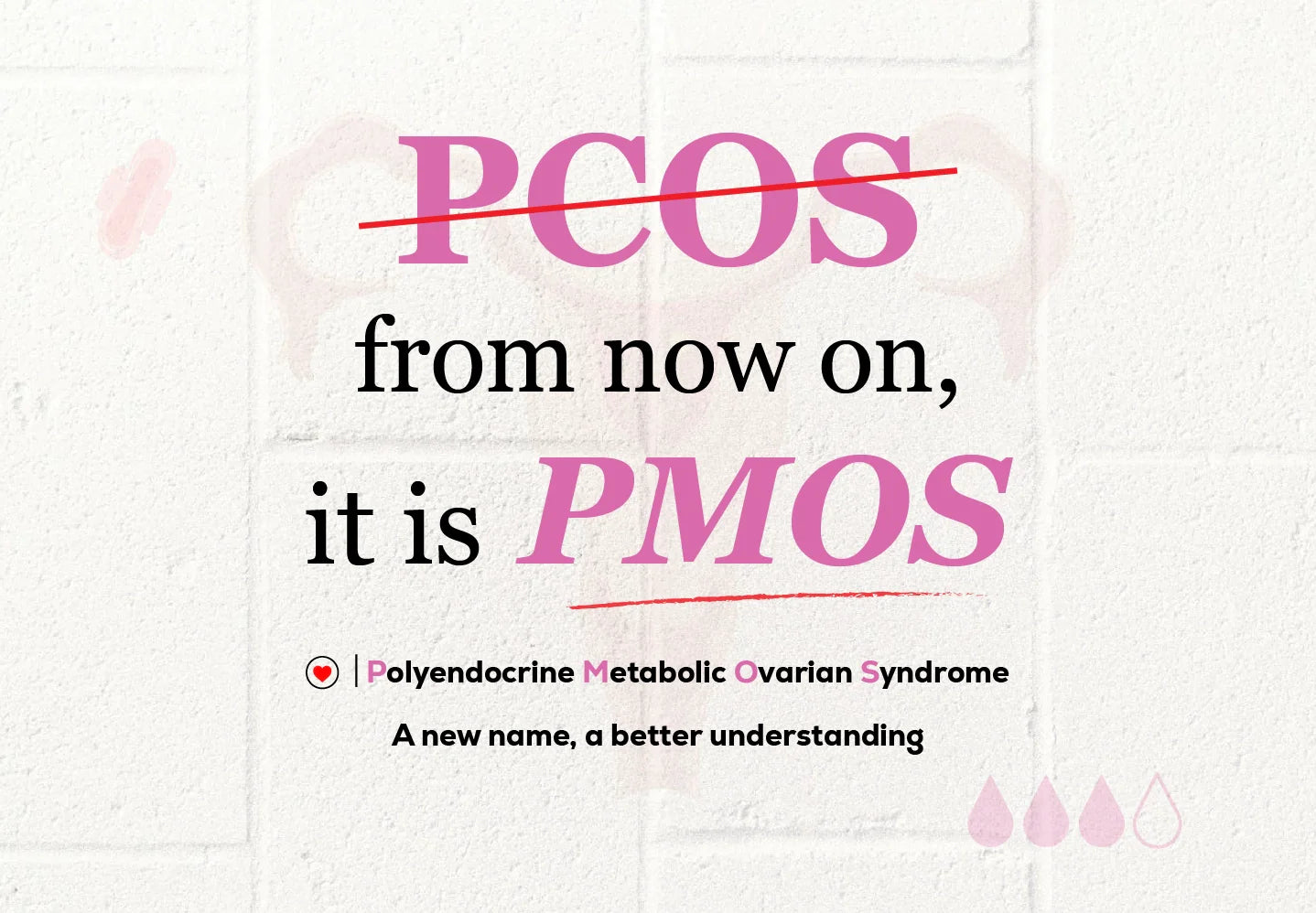
If you've been living with PCOS, managing it, or were just recently diagnosed - there's a landmark update you need to hear. The condition known as Polycystic Ovary Syndrome (PCOS) has officially been renamed Polyendocrine Metabolic Ovarian Syndrome (PMOS) as of May 12, 2026.
One letter. A world of difference.
This isn't just a technicality. It's a hard-won, science-backed victory over a decade in the making - and it matters deeply for every woman living with this condition.
Why Was PCOS Renamed? The Truth Behind the Old Name
Let's be honest: the old name was always misleading.
"Polycystic" suggested the condition was primarily about cysts on the ovaries. But many women with PCOS don't have visible cysts at all - and the so-called "cysts" seen on ultrasounds are actually arrested follicles that fail to develop due to hormonal imbalances, not true pathological cysts. The name pointed in the wrong direction and, in doing so, it delayed diagnoses, confused patients, and caused unnecessary shame and stigma.
Up to 70% of women with this condition remain undiagnosed. Nearly half of those who are diagnosed had to see multiple healthcare providers before getting answers. The old name was a key part of that problem - it created a blind spot for both doctors and patients searching for the right answers.
After years of collective frustration, something remarkable happened: the medical community actually listened.
22,000 Voices. 11 Years. One New Name.
This wasn't a decision made behind closed doors. It was the most extensive disease-renaming process in medical history.
Over 11 years, approximately 22,000 people - patients, doctors, researchers, charities, and advocates worldwide - participated in surveys and international workshops. Led by Professor Helena Teede at Monash University, Australia, and supported by 56 patient and professional organisations, including the Endocrine Society, the process was truly global.
The new name - Polyendocrine Metabolic Ovarian Syndrome (PMOS) - was unveiled in a landmark paper published in The Lancet on May 12, 2026, and presented at the European Congress of Endocrinology in Prague.
The community's top priorities for the new name were:
- Avoiding stigma
- Ease of communication
- Scientific accuracy
- Cultural appropriateness
PMOS delivers on all four.
What Does Polyendocrine Metabolic Ovarian Syndrome (PMOS) Actually Mean?
Break it down, and the new name tells the complete story:
- Poly-endocrine - Multiple hormonal systems are involved, including the pancreas, adrenal glands, thyroid, and ovaries - not just one organ.
- Metabolic - Insulin resistance, weight management, and cardiovascular risk are central to the condition, not secondary side effects.
- Ovarian - Yes, the ovaries are involved - but they are one piece of a much larger hormonal puzzle.
- Syndrome - A cluster of symptoms with no single cause, which is precisely what this condition is.
Together, PMOS finally reflects what patients have been saying for years: "This is so much more than my ovaries."
PMOS Symptoms: What Women Experience Every Day
Whether it was called PCOS or PMOS, the lived experience is unchanged. Common PMOS symptoms include:
- Irregular or absent periods - cycles longer than 35 days or fewer than 8 per year
- Hormonal acne - especially around the chin and jawline
- Unwanted facial or body hair (hirsutism) driven by elevated androgens
- Weight gain and difficulty losing weight, particularly around the abdomen
- Insulin resistance - causing fatigue, sugar cravings, and dark skin patches on the neck
- Hair thinning or loss on the scalp
- Mood changes, anxiety, and brain fog - a result of hormonal fluctuations
- Sleep disturbances, including a higher risk of sleep apnea
What the name change does is invite you - and your doctor - to see these as part of one connected hormonal and metabolic system, not a confusing set of isolated problems.
What This Means for Women Diagnosed With PCOS
If you've already been diagnosed with PCOS, the biology hasn't changed - only the understanding of it. And that understanding is finally catching up with lived experience. Here's what to expect going forward:
- Better, earlier diagnosis - Doctors trained on the PMOS framework will assess the full hormonal and metabolic picture, not just ovarian cysts on an ultrasound. Diagnosis can now be made based on androgen excess and irregular cycles alone.
- More holistic, metabolic-first treatment - PMOS signals a shift away from purely symptom management toward addressing root causes: insulin resistance, inflammation, and androgen overproduction.
- Less stigma - The new name is clinical, accurate, and neutral - describing what's happening in your body without shame or misrepresentation.
- Broader research funding - A clearer medical classification opens new doors for research into treatments, subtypes, and long-term health outcomes.
The WHO and International Classification of Diseases are expected to formally adopt PMOS as the global standard by 2028.
How to Support Your Body With PMOS Every Day
Managing PMOS means caring for your entire hormonal and metabolic ecosystem — every single day. Evidence-based lifestyle strategies include:
- Low-glycaemic, anti-inflammatory eating - reduces insulin resistance and supports more stable cycles
- Consistent movement - a mix of aerobic activity and strength training improves insulin sensitivity more effectively than almost any medication
- Stress management - high cortisol directly drives androgen levels up; rest is part of your treatment plan, not a luxury
- Clean, body-safe period care - for women with heightened hormonal sensitivity, what goes on your body matters as much as what goes in it
For women with PMOS who experience heavier periods, increased vaginal discharge, or heightened skin sensitivity, conventional period products made with synthetic materials and chemical fragrances can add unnecessary irritation to an already sensitive system.
The ZOY wellness liner is chemical-free and crafted for daily between-cycle use. Working through transdermal activation using body heat, it releases a carefully selected blend of herbs - Snow Lotus, Angelica, Motherwort, Astragalus, Mugwort, Safflower, and Mint - to support hormonal balance and pelvic circulation from the outside in. Not suitable during active periods, or for pregnant women or those with diabetes.
Removing one avoidable source of chemical exposure is a small step - but for women managing PMOS, small consistent steps are exactly how lasting wellbeing is built.
This blog is for educational purposes only and does not constitute medical advice. Always consult a qualified healthcare professional for diagnosis and treatment of PMOS (formerly PCOS) or any other medical condition


