

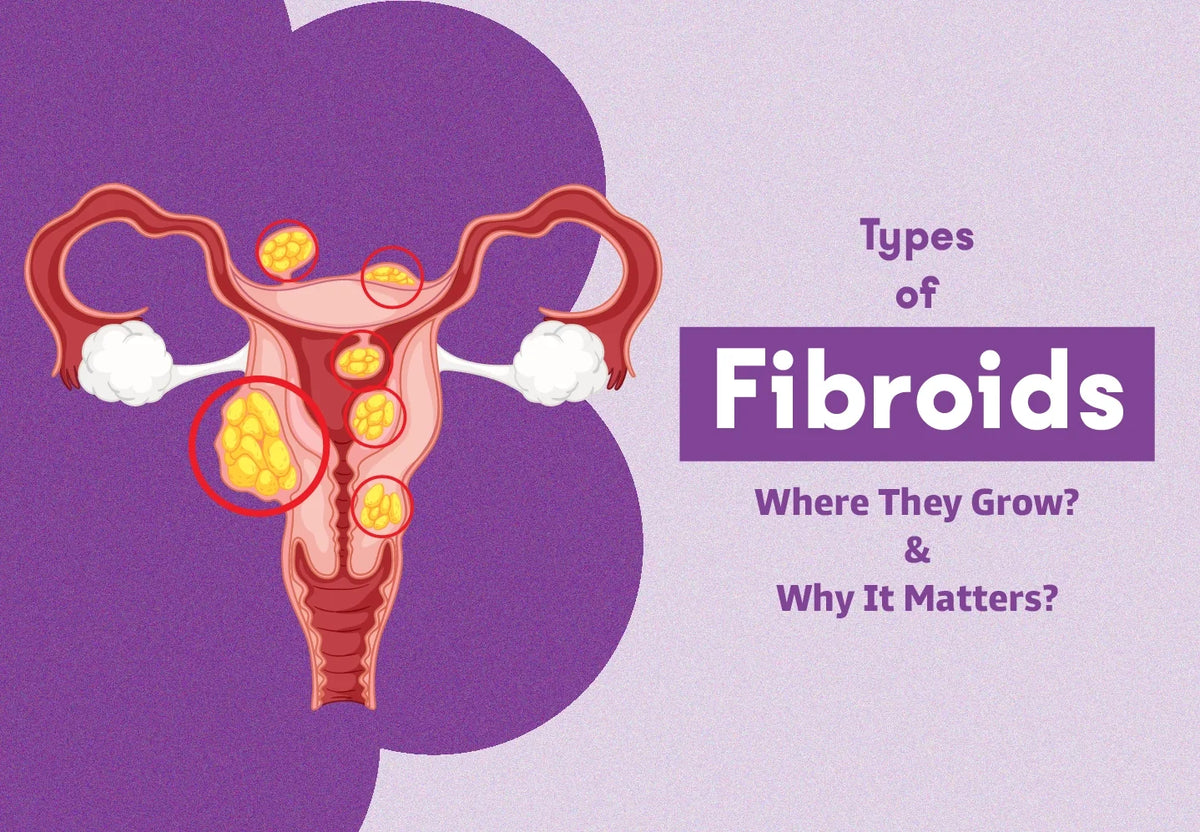
Fibroids are not one-size-fits-all. Two people can both be told they have “uterine fibroids” and end up with completely different experiences, because size, number, and especially location can change everything.
The 30-second answer
There are three main location-based types of uterine fibroids: intramural fibroids in the muscle wall, submucosal fibroids that grow toward the uterine cavity, and subserosal fibroids that grow toward the outside. Some fibroids are pedunculated, meaning they are attached by a stalk rather than sitting flush against the uterus.
What are uterine fibroids?
Uterine fibroids, also called leiomyomas or myomas, are benign growths made mainly of smooth muscle and connective tissue. A lot of people have no symptoms at all, and find out they have fibroids only during a scan or exam for something else.
When symptoms do show up, location matters just as much as size. A small fibroid sitting close to the uterine cavity can cause heavy bleeding, while a bigger fibroid growing outward might mainly cause pressure instead.
The main fibroid types, one by one
Intramural fibroids: in the muscle wall
Intramural fibroids grow inside the muscular wall of the uterus and are the type most commonly picked up on scans. They can make the uterus feel larger overall and may contribute to heavy periods, cramps, or a feeling of pressure. Whether they affect fertility depends on their size and whether they change the shape of the uterine cavity.
Submucosal fibroids: toward the cavity
Submucosal fibroids grow toward the space inside the uterus. Because they sit so close to the lining that sheds during your period, they are strongly linked to heavy or prolonged bleeding. Even a small submucosal fibroid can matter a lot if it distorts the shape of the cavity.
Subserosal fibroids: toward the outer surface
Subserosal fibroids grow toward the outside of the uterus. They may not change your bleeding much, but a larger one can press on the bladder, bowel, back, or other pelvic structures. That can feel like fullness, bloating, needing to pee more often, or constipation.
Pedunculated fibroids: attached by a stalk
Pedunculated is not a fourth location; it describes how a fibroid is attached, by a narrow stalk. It can grow inward from the cavity side or outward from the outer side. Symptoms depend on its direction and size, and in rare cases, sudden severe pain can happen if the stalk twists.
How doctors figure out the type
Ultrasound is the usual first step and can show the number, size, and location of your fibroids. MRI may be used when more detail is needed. Hysteroscopy lets doctors see, and sometimes treat, fibroids that project into the uterine cavity.
Does every fibroid need treatment?
No. Fibroids that are not causing symptoms often just need monitoring. Whether you need treatment comes down to your bleeding, pain, pressure, anaemia, fertility goals, age, size, and location. Options can include medicines, hormone-based treatments, procedures that reduce blood supply to the fibroid, focused procedures, myomectomy, or hysterectomy. The right choice is a personal one, made with your doctor.
Heavy-flow reality check
Period products can help you manage bleeding and take some of the leak anxiety off your plate. They cannot shrink or treat fibroids. Get medical attention for very heavy bleeding, dizziness, faintness, or sudden severe pain.
The bottom line
“Fibroid” is really just the start of the conversation. Ask where it is, how big it is, whether it changes the shape of your uterine cavity, and whether it actually explains your symptoms. That is the information that helps you and your doctor land on the right next step.
Heavy flow needs dependable coverage
While your doctor works on the cause, high-coverage period care can make long or unpredictable flow easier to live with. ZOY products support leak protection and external comfort. They do not treat fibroids.
Explore Disposable Period Panties | Explore Reusable Period Panties


