

Have you ever felt itchy, noticed an unusual smell, or had discomfort down there - especially around your period? It could be your vaginal pH trying to tell you something.
Most people have never heard of vaginal pH. But it plays a big role in keeping you healthy - every single day, and especially during your period.
Let's break it down in simple terms.
What Is Vaginal pH?
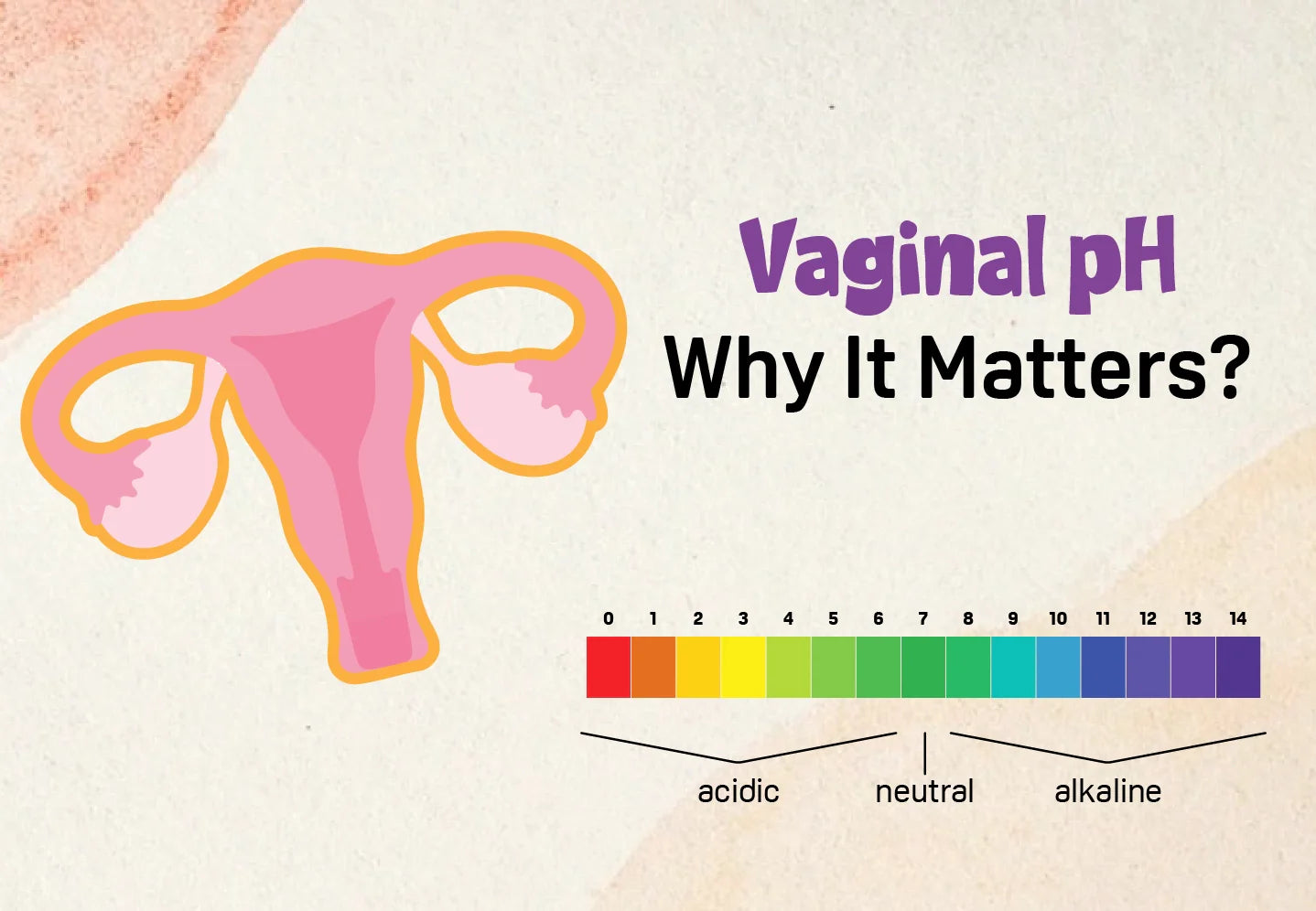
pH is a number that tells us how acidic or basic something is. The scale goes from 0 to 14.
- 0–6 is acidic (like lemon juice)
- 7 is neutral (like plain water)
- 8–14 is basic (like baking soda)
A healthy vagina is slightly acidic - usually between 3.8 and 4.5. This acidic environment is your body's natural defence system. It stops harmful bacteria and yeast from growing.
Think of it like a protective shield - invisible but very important.
Why Does Vaginal pH Matter?
When your pH stays in the healthy range, good bacteria (called Lactobacillus) keep things balanced. But when your pH goes too high - meaning it becomes less acidic - the balance breaks.
This can lead to:
- Bacterial vaginosis (BV) - a common infection with a fishy smell and unusual discharge
- Yeast infections - itching, burning, and thick white discharge
- Increased risk of STIs - a higher pH makes it easier for harmful organisms to survive
- General irritation and discomfort
Studies show that maintaining healthy vaginal pH is one of the most important - and most ignored - parts of intimate health.
How Your Period Affects Vaginal pH
Period blood has a pH of around 7.4 - much higher than the normal vaginal pH. So every time menstrual blood flows through, it temporarily raises your vaginal pH.
On top of that, if your sanitary pad contains harsh chemicals, synthetic fragrances, or bleaching agents, these can further disrupt your pH balance - even if you can't feel it right away.
This is why many women experience more infections, itching, or irritation during or just after their period. It's not a coincidence - it's pH disruption.
Your pad is touching your most sensitive skin for 4–7 days every month. What it's made of matters a lot.
What Can Disrupt Your Vaginal pH?
Many everyday habits can upset the balance:
- Using scented or chemical-based sanitary pads
- Douching (washing inside the vagina)
- Using soap inside the vaginal area
- Antibiotics (they kill good bacteria too)
- High sugar diet
- Stress and poor sleep
Small choices - like the pad you choose - can add up over months and years.
How to Protect Your Vaginal pH During Your Period
Here are simple steps you can take:
- Choose pads made with natural, non-toxic materials
- Avoid pads with synthetic fragrances or chemical gels
- Change your pad every 4–6 hours
- Wash the vaginal area with plain water only - no soap inside
- Eat probiotic-rich foods like curd or yogurt
- Wear breathable cotton underwear during your period
These are small habits, but they make a real difference.
Why Choosing a Clean Pad Is a pH-Friendly Choice
Most regular sanitary pads are made with synthetic plastics, artificial fragrances, and chemical bleach. These may feel soft on the outside, but they can silently raise your vaginal pH - especially with regular use.
ZOY pads are made to be different. They are non-toxic, gynae-recommended, and free from harmful chemicals. Their active herbal ingredients work with your body - not against it.
When your pad is clean, your intimate environment stays balanced - and that's when you feel your best.
The Bottom Line
Your vaginal pH is a tiny number with a big job. It protects you from infections, keeps good bacteria alive, and helps you feel comfortable every day.
During your period, your pH is already under pressure. The last thing it needs is a pad full of chemicals, making things worse.
Choosing a clean, non-toxic pad - like ZOY - is one of the simplest and most powerful ways to take care of your intimate health. Your body will thank you.


