

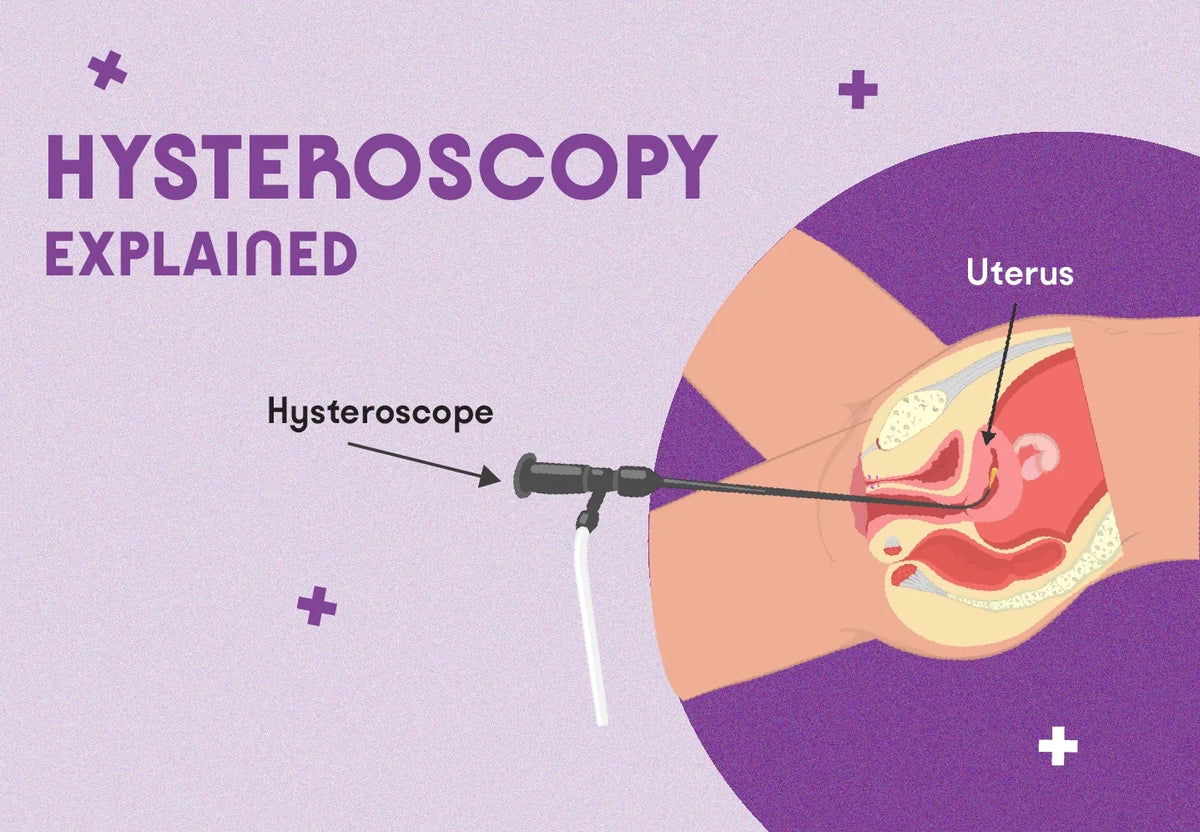
Hysteroscopy is a long word for a small camera that lets a doctor look inside your uterus, usually without any cut on your skin. Knowing the steps ahead of time can make the whole thing feel a lot less mysterious.
The 30-second answer
During a hysteroscopy, a thin lighted scope is passed through your vagina and cervix into your uterus. It can help diagnose or treat things like abnormal bleeding, polyps, some fibroids, scar tissue, and certain fertility concerns.
Diagnostic versus operative: what's the difference?
Diagnostic hysteroscopy looks inside your uterus to investigate bleeding, scan findings, fertility concerns, or repeated pregnancy loss. A small biopsy may be taken while your doctor is in there.
Operative hysteroscopy goes a step further, using fine instruments through the scope to remove a polyp, treat a fibroid that projects into the cavity, divide scar tissue, or correct another problem. The setting, pain relief, how long it takes, and your recovery can all look different depending on which type you are having, so it is worth asking your doctor which one applies to you.
Why might a doctor recommend it?
- Heavy, irregular, or unexplained uterine bleeding
- Bleeding after menopause
- A suspected polyp or fibroid inside the uterine cavity
- Scar tissue or a uterine septum
- Selected fertility or repeated miscarriage investigations
- Needing to remove tissue or take a biopsy under direct vision
Getting ready beforehand
Follow the instructions from your hospital or clinic, since preparation depends on the type of anaesthesia and what is planned. Tell your care team if there is any chance of pregnancy, if you take blood-thinning medicine, if you have allergies, or if you notice fever, unusual discharge, or other signs of infection.
- Only fast if your care team specifically tells you to.
- Ask which pain relief or anaesthesia option will be used.
- Arrange a ride home if sedation or general anaesthesia is planned.
- Wear comfortable clothing and bring a sanitary pad for possible spotting.
- Ask whether any of your regular medicine should be paused or taken beforehand.
What actually happens during the procedure
- Positioning. You lie in a position similar to a routine pelvic exam.
- The scope goes in. The hysteroscope passes through your vagina and cervix into your uterus. There is usually no external cut.
- The cavity is gently opened up. Sterile fluid, usually saline, is used so your doctor can see the uterine lining clearly.
- The uterus is examined. Images may be recorded, and if it was planned, a biopsy or treatment happens at the same time.
Is it painful?
It really varies. Some people feel mild pressure or period-like cramps; others find it more uncomfortable. It can depend on your cervix, the type of procedure, your past experiences, anxiety levels, whether treatment is being done, and what pain relief is used. You are allowed to talk through pain management before the procedure, and to tell your team if you need them to pause.
What to expect afterwards
Mild cramps, watery discharge, or light spotting are common. Recovery is usually quick after a simple diagnostic procedure and can take longer after treatment or anaesthesia. Follow your clinician's specific advice about sex, tampons, menstrual cups, bathing, exercise, driving, and going back to work.
Call your doctor right away if you notice
Heavy bleeding, fever, worsening or severe pain, feeling faint, or foul-smelling discharge after the procedure.
Questions worth asking before you consent
- Is this diagnostic or operative?
- What exactly are you looking for or planning to treat?
- What pain-relief choices do I have?
- Will a biopsy be taken?
- What should I avoid afterwards, and for how long?
- When and how will I get my results?
The bottom line
Hysteroscopy gives your doctor a direct view inside your uterus, and it can sometimes diagnose and treat a problem in the same visit. Ask about pain relief, follow your preparation instructions, and know the warning signs to watch for during recovery. Clear information is part of giving informed consent, and you are allowed to ask as many questions as you need to.
Practical care for spotting afterwards
Your clinician may recommend a sanitary pad for light spotting after your hysteroscopy. Follow their instructions, and do not use a tampon, cup, or other internal product until they say it is safe to.


