

Blogs

Managing Heavy Periods: A Practical Guide to Supporting Your Body
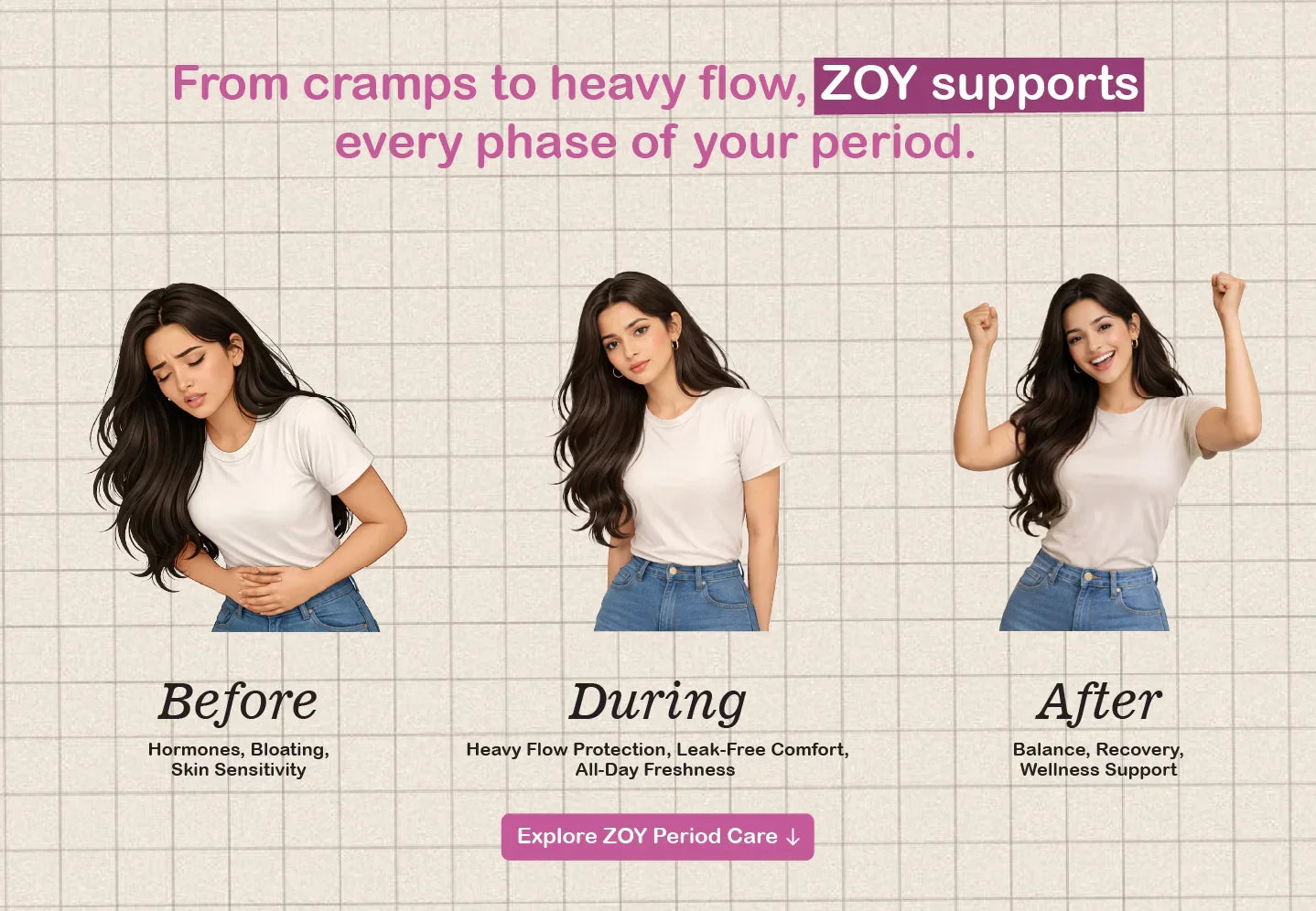
Heavy periods are not unusual for many women; the first one or two days of their cycle bring stronger flow, deeper cramps, and lower energy. It can feel intense, both physically and mentally. Managing heavy periods is not about forcing your body to behave differently. It’s about understanding your pattern and choosing support that matches your flow. When you understand what your body is doing, heavy days become more predictable and far more manageable. This guide explains what heavy flow means, how to prepare for it, and which practical protection choices can support your body with confidence. When Is a Period Considered Heavy? Clinically and practically, heavy menstrual flow may include: Needing to change protection every 1–2 hours Passing larger clots Bleeding longer than 7 days Waking up due to leakage Feeling unusually weak or drained If your bleeding suddenly becomes heavier than your usual cycle or you experience dizziness, consult a healthcare professional. Predictable heavy days, however, can often be managed with preparation and the right protection strategy. Why Heavy Days Feel More Exhausting The physical strain is obvious with stronger cramps, abdominal pressure, and fatigue. But the mental load matters just as much. Heavy days often involve: Calculating when to change protection Worrying about stains Adjusting clothing or movement Staying mentally alert to leaks This constant vigilance drains energy. When protection feels secure, your mind relaxes, and the experience becomes less stressful. Practical Ways to Manage Heavy Flow Track Your Pattern If your first days are consistently heavier, plan ahead. Keep high-absorbency protection ready before your cycle begins. Use Higher Absorption When Needed The right absorption reduces frequent changes and discomfort. Protect Your Sleep Reliable overnight protection supports uninterrupted rest, which is essential for recovery and energy. Monitor Your Health Persistent fatigue may signal iron depletion. Medical consultation ensures your body is properly supported. Preparation removes uncertainty, and uncertainty is often what makes heavy days feel overwhelming. Choosing Support That Stays in Place On heavy days, full coverage protection matters especially during work, travel, or sleep. ZOY offers solutions designed specifically for unpredictable heavy flow. ZOY Disposable Period Panties These disposable period panties provide a single-piece absorbent system built into soft fabric, eliminating pad shifting. They deliver: 360° leak-lock coverage High-absorbency core Breathable comfort Up to 12 hours of protection Many women use them during heavy-flow days, overnight, postpartum recovery, or travel when reliability matters most. Dependable Heavy-Flow Protection with Pads If you prefer pads, two high-absorption options support different needs: ZOY Graphene Anion Sanitary Pads Antibacterial graphene layer pH-balancing support Breathable comfort Extended wear confidence ZOY Herbal Sanitary Pads Ayurvedic herbal infusion Comfort-focused design Secure leak protection Both options prioritise skin comfort, airflow, and reliable absorption essential for heavy-flow days. There’s no single correct routine. Some switch products after the heaviest days. Others add overnight protection. The best choice is the one that lets you move through your day without distraction. Final Thoughts Heavy periods don’t have to feel like a monthly obstacle. Understanding your flow and choosing protection that performs consistently transforms the experience: Less checking. Less adjusting. More focus on your day. That’s what practical period support should provide. Frequently Asked Questions When is a period considered heavy? If you change protection every 1–2 hours, pass clots, bleed longer than 7 days, or wake due to leaks, your flow may be heavy. Sudden changes should be medically evaluated. Why do heavy days feel exhausting? Stronger cramps and fatigue combine with mental alertness about leaks. Secure protection reduces stress and energy drain. How can I prepare for heavy-flow days? Track your cycle, use high-absorbency protection early, protect sleep, and monitor energy levels. What works best overnight during heavy periods? Full-coverage disposable period panties provide leak-lock security and extended protection for uninterrupted sleep. Are pads enough for heavy periods? Yes, ZOY's high-absorbency pads, designed for leak control and breathability, offer dependable protection even on your heaviest days. Can heavy periods be a sign of a health problem? Yes, heavy bleeding can sometimes indicate conditions like PCOS, fibroids, thyroid issues, or anaemia. If your flow is unusually heavy or painful, consult a doctor for proper evaluation. What foods help during heavy period days? Iron-rich foods like spinach, lentils, and dates help replenish blood loss. Stay hydrated and include magnesium-rich foods like bananas and nuts to reduce cramps and fatigue. How do I stop period leaks at night? Use overnight period panties or extra-long pads with side barriers. Sleep on your back or side, place a dark towel under you for added protection, and change your pad before bed.
Learn more
Why the HPV Vaccine Matters: Key Benefits and Who Should Get It
Curious about HPV, the virus that silently infects millions worldwide? It often shows no symptoms, but here’s the alarming truth: it causes nearly all cervical cancers, plus many throat, anal, and genital cancers. In India, over 1,00,000 women are diagnosed with cervical cancer each year, making it a leading killer. Having explored health research, I’ve seen how the HPV vaccine can prevent this. Let’s unpack why it’s essential, who should get it, and how vaccines like Gardasil, Gardasil-9, and Cervarix work, drawing on trusted sources like the CDC, Mayo Clinic, and Cleveland Clinic. What Is HPV and Why Is It a Big Deal? HPV spreads through skin-to-skin contact during sex, and most sexually active people get it at some point. About 80% of infections clear up on their own, but persistent ones from high-risk strains (like HPV 16 and 18) can lead to cancer. Low-risk types cause genital warts. Without vaccination, you are taking a high risk, especially in a country like India, where screening is limited and awareness is low. The World Health Organisation aims to eliminate cervical cancer, and vaccination is step one. How Does the HPV Vaccine Work? The vaccine trains your immune system to fight HPV before it causes trouble. In the US and India, Gardasil-9 is a common vaccine, and it protects against nine strains, covering 90% of HPV-related cancers and warts. Other options like Cervarix or India's Cervavac target key cancer-causing types. It's not a cure for existing infections, but prevents new ones. Studies show vaccinated groups have seen HPV infections drop by 88% in teen girls and precancers by 40% as per CDC data. Who Should Get the HPV Vaccine and When? Experts recommend starting at ages 11-12, but kids as young as 9 can get it. For ages 9-14, two doses (6-12 months apart) are enough. Teens 15+ and adults up to 26 need three doses over six months. Catch-up shots are okay up to 45 for those at risk, like if you've had a few partners. Boys and men should vaccinate too because it cuts transmission and protects against penile and throat cancers. Not for pregnant people or those with severe allergies to vaccine ingredients.In India, the Indian Academy of Paediatrics pushes for girls aged 9-26, with catch-up for women up to 45. It's safe for mildly ill folks, but wait if you're seriously sick. Benefits, Side Effects, and Busting Myths The perks? It slashes cancer risk by 90%, reduces warts, and creates "herd protection" for unvaccinated partners. Long-term studies (over 12 years) show lasting immunity with no boosters needed. Side effects are mild: sore arm, headache, or fever. Fainting is rare in teens, so sit for 15 minutes post-shot.Myth: It encourages early sex? Nope. The research says no study behind this claim. Myth: The HPV vaccine is only for women? Nope. Men also benefit hugely.Myth: Useless if sexually active? Wrong. It still guards against new strains. Why Act Now? HPV vaccination is cancer prevention in a shot. In India, low uptake due to cost (₹2,000-4,000 per dose) and stigma means we're missing out. Government programs and awareness drives are growing; consult your healthcare professional before getting vaccinated. Even if vaccinated, keep up Pap tests for full protection.Don't wait for symptoms; vaccinate early. It's safe, effective, and could save your life or a loved one's. Frequently Asked Questions What is HPV and why is it dangerous? HPV is a common virus that spreads through skin contact during sex. It can lead to serious health problems like cervical cancer and other types of cancer if not prevented. What does the HPV vaccine protect against? The HPV vaccine helps protect against the types of HPV that cause most cervical cancers and genital warts. It works by training your body to fight the virus early. Who should get the HPV vaccine? The vaccine is recommended for girls and boys starting from age 9. It is most effective when taken before becoming sexually active, but older teens and adults can also benefit. How many doses of the HPV vaccine are needed? Children aged 9 to 14 usually need two doses. People aged 15 and above may need three doses over a few months. A doctor can guide the right schedule. Is the HPV vaccine safe? Yes, the HPV vaccine is safe and well tested. Most people only have mild side effects like arm pain, slight fever, or headache. Can the HPV vaccine prevent cervical cancer? Yes, it can greatly reduce the risk of cervical cancer. It protects against the main HPV types that cause most cases of this cancer. Can I get the HPV vaccine if I am already sexually active? Yes, you can still get the vaccine. It can protect you from HPV types you have not been exposed to yet. Do I still need screening after getting the HPV vaccine? Yes, regular screening like Pap tests is still important. The vaccine does not protect against all HPV types, so screening helps detect any early changes.
Learn more